
Dog desexing: when, why and what to expect

Desexing your dog is an important decision, and one of the questions we're most commonly asked is, "When is the best time to have my dog desexed?"
The answer isn't always as straightforward as it used to be.
While desexing at around six months is appropriate for many dogs, newer research suggests that some larger breeds may benefit from waiting until they're more physically mature. Your dog's breed, size, sex and individual health can all influence the best timing.
At Nimble Veterinary Hospital, we take these factors into consideration to help you make an informed decision that's right for your dog.
Below, we explain the benefits of desexing, recommended ages, what happens during surgery, how to prepare and what to expect during recovery.
Why desex your dog?
Desexing is a surgical procedure that removes the reproductive organs. In female dogs, this is known as spaying, while in males it's called castration.
There are several important health, behavioural and practical benefits.
Health benefits
- Prevents pyometra: This is a life-threatening infection of the uterus in female dogs. When it occurs, emergency surgery is often required, which carries greater risks than a planned desexing procedure.
- Reduces mammary cancer risk: Spaying female dogs, particularly before they've had many seasons, is associated with a lower risk of developing mammary (breast) tumours later in life.
- Eliminates testicular cancer risk: Castration removes the risk of testicular cancer in male dogs.
- Reduces certain prostate and hernia-related problems: Desexing can help prevent some reproductive hormone-related conditions in male dogs.
For more information, read our article on mammary tumours in female dogs.
Behavioural benefits
Desexing can reduce behaviours influenced by reproductive hormones, including:
- Roaming in search of a mate
- Fighting with other dogs
- Urine marking
- Mounting behaviour
It's important to have realistic expectations. Desexing can reduce hormone-driven behaviours, but it won't necessarily resolve behaviours that have been learned or are driven by fear or anxiety.
It also won't change your dog's basic personality.
Other practical benefits
Desexing prevents unplanned litters and helps reduce the number of unwanted animals entering shelters and pounds.
For female dogs, it also eliminates seasons, which can involve bleeding, attracting male dogs and additional challenges when visiting parks or boarding facilities.
When should you desex your dog?
The NSW Pet Registry recommends desexing dogs by six months of age. However, this doesn't mean six months is the ideal age for every dog.
Research increasingly suggests that the best timing should consider your dog's expected adult size, breed and sex.
Sex hormones play a role in skeletal development. In some larger breeds, desexing very early has been associated with an increased risk of certain joint conditions, including cruciate ligament disease, as well as some cancers.
For many smaller and medium-sized breeds, the age at desexing appears to make little difference to long-term health.
Recommended desexing ages by dog size
| Expected adult size | General recommendation |
|---|---|
| Small breeds (under approximately 10 kg) | Around 6 months is generally a sensible time. |
| Medium breeds (approximately 10-25 kg) | Usually between 6 and 12 months, depending on breed and lifestyle. |
| Large and giant breeds (over approximately 25 kg) | Often better to wait until growth is largely complete, commonly 12 months or later. Some breeds, particularly males, may benefit from waiting longer. |
These are general guidelines, not fixed rules.
The available research examines associations in particular breeds and doesn't cover every breed or mixed-breed dog. It also doesn't establish that early desexing directly causes these conditions.
Special considerations for female dogs
Female dogs are often spayed before their first season, which typically occurs between six and twelve months of age, although larger breeds may mature later.
Spaying before the first season is associated with a lower risk of mammary tumours.
However, timing can also influence other long-term health considerations.
For example, one large study found that spaying later in the first year was associated with a reduced risk of urinary incontinence in female dogs weighing more than approximately 25 kg. In smaller dogs, the age at spaying appeared to make little difference.
This is why we consider the individual dog rather than automatically recommending the same age for every breed.
You can learn more in our articles on cruciate ligament disease, hip dysplasia and urinary incontinence in dogs.
Have a large-breed puppy?
We recommend discussing desexing before your puppy reaches six months of age, even if the surgery itself may be better performed later.
That allows us to discuss the research, consider your dog's individual circumstances and arrange any necessary veterinary documentation under the NSW registration requirements.
Dog desexing and NSW Pet Registry requirements
In NSW, dogs must be microchipped and lifetime-registered with the NSW Pet Registry, generally by 12 weeks of age or when first transferred to a new owner.
The Registry recommends desexing by six months.
As at 1 July 2026:
- Standard lifetime registration for dogs is $84.
- An additional once-only fee of $198 applies to dogs that are not desexed by the recommended age, unless an applicable exemption is recognised.
- Reduced fees apply to eligible pensioners and certain other categories.
These fees can change, so please check the NSW Pet Registry for current amounts.
What if your vet recommends delaying desexing?
Where desexing should be delayed for medical reasons, the NSW system provides for a veterinary recommendation.
To seek an exemption from the additional fee, the recommendation needs to be arranged before your dog turns six months old.
If the delay is temporary, desexing must be completed by the date specified in the veterinary recommendation.
We can provide the relevant veterinary documentation for you to take to your local council for processing. Whether an exemption applies is determined under the NSW rules.
After surgery, make sure your dog's desexing status is updated on the NSW Pet Registry. We'll provide the paperwork you need.
How to prepare your dog for desexing surgery
A little preparation can make surgery day easier for both you and your dog.
Before your appointment:
- Food and water: Food is usually withheld from the night before surgery. Water is generally fine until the morning. Follow the specific fasting instructions provided by our team.
- Medications and health: Tell us about any existing conditions, regular medications or recent illness.
- Female dogs: Let us know if your dog may be in season, has recently had a litter or has experienced a false pregnancy.
- Vaccinations: Check that your dog's vaccinations are up to date.
- Arrival: Bring your dog on a lead and allow time for a toilet break before admission.
- Recovery space: Prepare a quiet, warm, clean area at home, away from stairs, other pets and young children.
What happens during dog desexing surgery?
Desexing is one of the most common operations we perform at Nimble Veterinary Hospital.
Although it is a routine procedure, we approach every patient individually, with careful assessment, anaesthetic monitoring and pain management.
Admission and health assessment
When you arrive, we'll admit your dog, review the consent form and answer any questions about the procedure and costs.
Your dog receives a physical examination before anaesthesia to assess their health. Depending on their age and condition, we may also recommend intravenous fluids.
Recommended pre-surgical blood testing
We recommend an in-house blood test before surgery.
A physical examination alone cannot tell us how well the kidneys and liver are functioning. These organs play an important role in processing and clearing anaesthetic medications.
Even young dogs that appear healthy can occasionally have underlying issues, including liver or kidney abnormalities, blood-sugar problems or anaemia.
Blood testing can help identify concerns before surgery and provides a useful baseline for future health assessments.
This testing involves an additional cost, which we're happy to explain at admission.
Anaesthesia and pain relief
Your dog receives premedication to provide sedation and pain relief before general anaesthesia begins.
Throughout surgery, your dog is carefully monitored.
The desexing procedure
Female dogs: The ovaries, and usually the uterus, are removed through an incision in the abdomen.
Male dogs: The testicles are removed through a small incision in front of the scrotum.
The wound is usually closed using dissolvable stitches beneath the skin, although some dogs may require external skin stitches that are removed later.
Some procedures are more involved than routine desexing. For example, this can occur if a male dog's testicle hasn't descended (cryptorchidism), a female is in season, or a dog is significantly overweight or has recently had a litter.
We'll explain beforehand if we expect additional surgical considerations or costs.
Recovery and going home
Your dog will wake up in a warm, monitored recovery area and continue receiving appropriate pain relief.
Most dogs return home the same afternoon.
Before discharge, one of our nurses will explain your dog's medication, wound care, activity restrictions and any follow-up appointment.
Caring for your dog after desexing
Most dogs recover well after desexing, but proper aftercare is essential for wound healing.
The first 24 hours
Your dog may be sleepy, wobbly or a little cold while recovering from the anaesthetic.
Keep them comfortable in a warm, quiet area and offer a small meal and water in the evening, as directed by our team.
A slightly reduced appetite on the first night can be normal.
The next 10-14 days
Even if your dog seems back to normal after a few days, the surgical wound still needs time to heal.
During this period:
- Prevent licking and chewing. Keep the Elizabethan collar or recovery suit on at all times, including overnight.
- Check the wound twice daily. A little redness or swelling can be normal initially, but heat, discharge, an opening wound or increasing swelling is not.
- Restrict exercise. Toilet breaks should be on a lead only. Avoid running, jumping, rough play and off-lead exercise.
- Keep the wound dry. No swimming or bathing until the wound has healed.
- Give prescribed medication. Use only the pain relief supplied by our veterinary team. Many human medications are toxic to pets.
- Attend the recheck. Any external skin stitches are usually removed at approximately 10-14 days.
Male dogs can remain fertile for a few weeks after castration, so keep them separated from undesexed female dogs during this period.
When to contact us urgently
Please contact the hospital promptly if you notice:
- Bleeding or dripping from the wound
- The wound opening or developing a growing swelling
- Pale gums, laboured breathing, collapse or marked weakness
- Persistent vomiting
- No interest in food or water the day after surgery
If you are concerned about your dog's recovery, it's always better to contact us.
What are the risks of desexing?
Desexing is a routine and generally very safe procedure, but no surgery or general anaesthetic is completely without risk.
Potential complications include:
- Anaesthetic complications: Serious problems are uncommon in healthy dogs, but risks can increase with age, existing illness and in flat-faced (brachycephalic) breeds.
- Bleeding: Uncommon, but more likely in larger females, dogs in season or overweight patients. Internal bleeding may cause pale gums, weakness or abdominal swelling and requires urgent attention.
- Wound complications: Infection, fluid build-up (seroma), swelling or wound breakdown can occur, particularly if a dog licks the area or becomes too active. Male dogs may experience scrotal swelling or bruising.
- Suture reactions or hernias: Uncommon, but occasionally seen.
- Urinary incontinence: Some spayed female dogs, particularly larger breeds, develop urine leakage months or years after surgery. This is uncommon and can usually be managed with medication.
- Joint and cancer associations: Early desexing has been associated with an increased incidence of certain joint disorders and cancers in some breeds.
- Ovarian remnant: Rarely, remaining ovarian tissue can cause a female dog to show signs of coming into season again, potentially requiring further surgery.
- Weight gain: Desexed dogs may burn fewer calories and have an increased appetite.
For most dogs, the risks are small compared with the health and welfare benefits of desexing. We'll discuss any individual concerns with you before surgery.
Managing your dog's weight after desexing
Weight gain is one of the more common long-term changes following desexing, but it's also one of the most manageable.
Your dog may need fewer calories after surgery, even if their appetite increases.
We can help you review their diet and portion sizes, and recommend an appropriate exercise routine once they've recovered.
Maintaining a healthy weight is particularly important for reducing the risk of joint problems, diabetes and other health complications.
Frequently asked questions about dog desexing
Book your dog's desexing appointment at Nimble Veterinary Hospital
Whether you've just welcomed a puppy into your family, are considering desexing an older dog or want advice on the best timing for a larger breed, we're here to help.
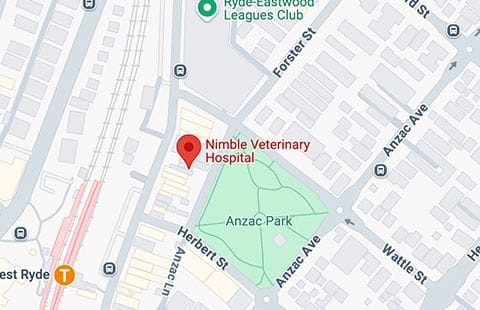
At Nimble Veterinary Hospital in West Ryde, we'll take the time to discuss your dog's individual needs, explain the procedure and help you feel prepared for surgery and recovery.
Ready to take the next step?
Download our Dog Desexing Guide
Want a simple reference to keep handy?
Download our Dog Desexing Owner Guide, which includes preparation checklists, what to expect on surgery day, aftercare instructions and warning signs to watch for during recovery.
Download the Dog Desexing Guide
This information is intended as general guidance. Please follow any specific veterinary instructions provided for your dog.
Written by the team at Nimble Veterinary Hospital | Last reviewed October 2026
On this page
When should you desex your dog?
Dog desexing and NSW Pet Registry requirements
How to prepare your dog for desexing surgery
What happens during dog desexing surgery?
Caring for your dog after desexing
What are the risks of desexing?
Frequently asked questions about dog desexing
Book your dog's desexing appointment at Nimble Veterinary Hospital